
If you’re dreaming about a home theater, one of the first questions you’re probably asking is: How much does a home theater cost in North Carolina?
The answer can vary significantly. A simple media room with a large TV and surround sound can be relatively straightforward, while a dedicated theater with a projector, acoustical treatments, custom seating, automated lighting and integrated control can become a much more extensive project.
Rather than thinking about one “average” home theater price, it’s more useful to understand the different levels of systems and what goes into the investment.
At AVE Integration, every home theater is custom-designed around the room, the homeowner’s goals, the desired performance and the overall design of the home.
Home Theater Cost in North Carolina: What Should You Expect?
As a general planning guide, home entertainment projects can fall into several broad categories.
Basic Media Room: Approximately $10,000–$25,000+
A basic media room may use an existing room and focus on improving the television and audio experience.
This type of project might include:
- Large-format 4K television
- Surround-sound system
- Soundbar or architectural speakers
- AV receiver
- Basic equipment
- Professional wiring
- Simple lighting integration
This can be a good option for homeowners who want a significantly better entertainment experience without building a dedicated theater.
The final cost depends heavily on the equipment selected, number of speakers, installation requirements and whether existing wiring can be used.
Dedicated Home Theater: Approximately $25,000–$75,000+
A dedicated theater is designed specifically around the movie-watching experience.
It may include:
- Large screen or projector
- Surround sound
- Subwoofer(s)
- In-wall or in-ceiling speakers
- Acoustic treatments
- Dedicated lighting
- Theater seating
- AV equipment
- Structured wiring
- Smart-home integration
At this level, the room itself becomes part of the system.
Room dimensions, seating position, speaker placement, viewing distance, lighting and acoustics all need to work together. AVE’s home theater design process considers these factors rather than simply installing equipment in an existing room.
High-End or Luxury Home Theater: $75,000–$150,000+
Luxury theaters can go considerably higher depending on the size and complexity of the project.
A high-end system might include:
- Large projection screen
- High-performance projector
- Premium surround sound
- Multiple subwoofers
- Extensive acoustic treatment
- Custom theater seating
- Architectural lighting
- Motorized shades
- Automated scenes
- Custom cabinetry
- Dedicated equipment rack
- Advanced control systems
- Extensive pre-wiring
At this level, you’re not simply purchasing a collection of electronics. You’re designing an entertainment environment where the technology, architecture and interior design all work together.
These ranges are general planning guidelines, not quotes from AVE Integration. The actual cost of a home theater depends on the room, equipment, finishes, wiring, installation requirements and level of integration.
What Affects the Cost of a Home Theater?
The equipment itself is only part of the investment. Several other factors can have a major impact on the final price.
Projector vs. Large-Format TV
One of the first decisions is whether you want a traditional television or a projection system.
A large-format 4K display can provide excellent picture quality and is often a straightforward solution for a media room.
A projector and dedicated screen can create a more traditional cinematic experience, particularly when paired with a properly designed theater environment.
The right choice depends on the room, desired screen size, ambient light and how you plan to use the space.
Audio and Speakers
Sound is one of the most important parts of a home theater.
A professionally designed system may include:
- Front speakers
- Center-channel speaker
- Surround speakers
- Height speakers
- Subwoofers
- In-wall or in-ceiling speakers
AVE designs systems around the room and strategically places speakers to create an immersive listening experience.
For homeowners interested in a clean aesthetic, speakers can also be integrated into walls, ceilings or custom cabinetry.
Acoustic Treatment
A beautiful theater with expensive equipment can still sound disappointing if the room’s acoustics aren’t properly considered.
Walls, floors, ceilings, furniture and room dimensions all influence how sound behaves.
Depending on the room, acoustic treatment can help manage reflections and improve the overall listening experience.
For a dedicated theater, acoustic considerations should be part of the design—not something added after the equipment has already been installed.
Seating
Home theater seating can range from comfortable furniture to purpose-built theater seats.
Your budget may increase if you want:
- Multiple rows
- Reclining seats
- Powered seating
- Premium upholstery
- Cup holders and accessories
- Custom configurations
The number of people you want to accommodate will also influence the room’s size and layout.
Lighting
Lighting can make a surprisingly big difference in a theater.
A well-designed system can provide appropriate lighting for different activities rather than simply turning the room’s lights on and off.
For example, a Movie Night scene could lower the lights and adjust other connected systems at the push of a button.
AVE specializes in integrating lighting with home automation and entertainment systems.
Automation and Control
A professionally integrated theater can be much easier to operate than a collection of individual components and remotes.
A single control interface can potentially manage:
- Display
- Audio
- Lighting
- Motorized shades
- Climate
- Other connected home systems
Instead of figuring out which remote controls which component, the homeowner can select a scene such as Movie Night and let the system handle the rest.
Wiring and Infrastructure
Wiring is one of the least visible—but most important—parts of a home theater.
Proper planning can accommodate:
- Speakers
- Displays
- Network connections
- AV equipment
- Control systems
- Future technology
If you’re building a new home, pre-wiring before the walls are closed gives you substantially more flexibility and can help eliminate visible cables. AVE specifically recommends involving the technology team during the design phase so wiring, equipment locations and room design can be planned together.
New Construction vs. Existing Home
The timing of your project can also affect the design and installation process.
Building a new home? This is the ideal time to plan your theater. AVE can work with the builder, architect and design team to determine speaker locations, display locations, wiring, equipment racks, lighting and other infrastructure before construction is complete.
Remodeling an existing home? A theater can still be added to an existing house. However, the available room, existing wiring and construction may influence the design.
Planning ahead can help minimize compromises and avoid unnecessary retrofit work.
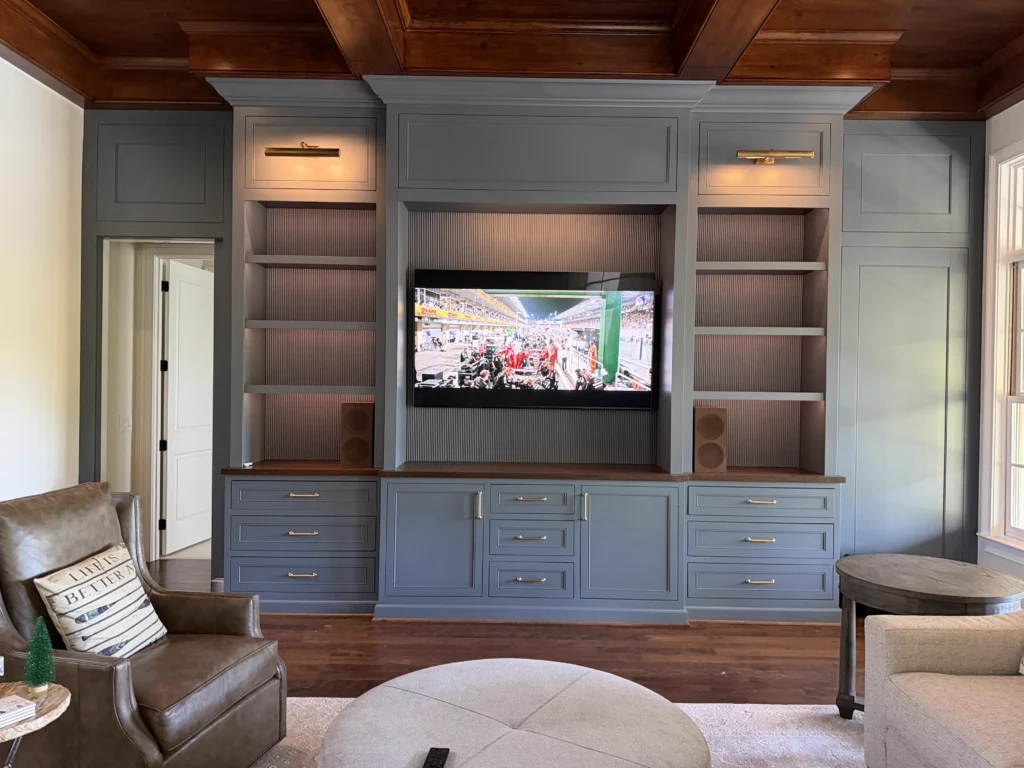
A Real-World Example: Custom Media Center in New London, NC
One recent AVE Integration project demonstrates how a home entertainment system can go beyond simply mounting a television on the wall.
For this New London, North Carolina homeowner, AVE created a custom media center inspired by the company’s Kernersville showroom.
The project incorporated an automated TV lift that allows the television to rise into viewing position and then retract into custom cabinetry when it’s not being used. The entertainment wall also features integrated speakers, architectural cove lighting, automated lighting scenes, storage and custom finishes designed to complement the surrounding room.
The result illustrates an important point: home theater and media-room technology doesn’t have to compete with the design of your home. With proper planning, the technology can become part of the architecture.
Is a Home Theater Worth the Investment?
For homeowners who regularly watch movies, sports, play video games or entertain friends and family, a well-designed entertainment space can become one of the most-used areas of the home.
But the goal shouldn’t simply be to purchase the most expensive equipment.The best system is one that is designed around:
- How you use the room
- The size and layout of the space
- Your desired viewing experience
- Your audio preferences
- Your home’s architecture
- Your budget
- Your future technology needs
A professionally designed system can also make the technology easier to use by bringing audio, video, lighting and automation together.
Planning a Home Theater in North Carolina?
Whether you’re envisioning a dedicated home theater, a family media room or a sophisticated entertainment wall, AVE Integration can help design and install a system around your home and lifestyle.
AVE Integration provides custom home theater and media room design and installation throughout North Carolina, including the Triad, Raleigh, Charlotte and surrounding areas.
Ready to start planning your home theater? Contact AVE Integration to discuss your space, goals and budget.